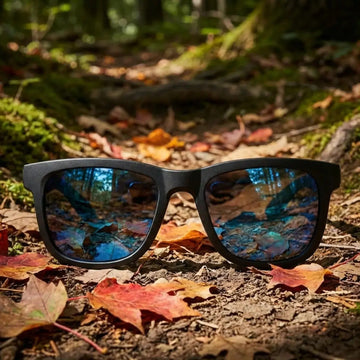
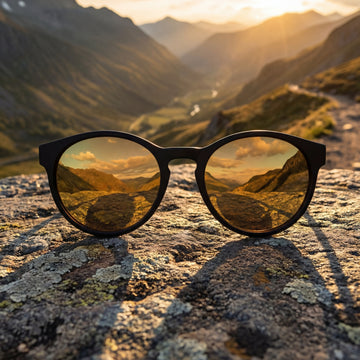
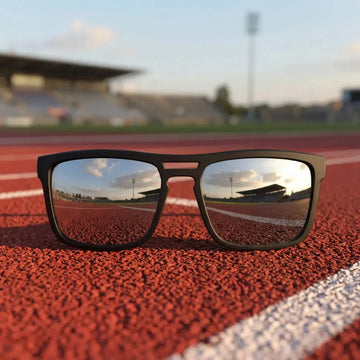
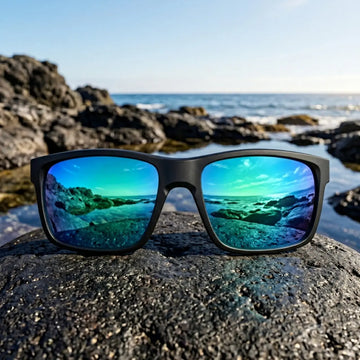
Polarized sunglasses are useful when reflected glare is the main problem, such as water, wet roads, glass and bright outdoor surfaces. They are not automatically best for every situation: some phone, watch, GPS or dashboard screens can look darker or show a rainbow effect through polarized lenses, so UV400 protection, screen readability, comfort and real use case should all be checked before buying.
Polarized sunglasses solve glare, not every lens problem
Polarized sunglasses are designed to reduce reflected glare. That makes them useful around water, bright roads, glass-fronted buildings and open outdoor spaces where light bounces into your eyes from flat surfaces.
The important point is that polarization is one lens behavior, not the whole buying decision. A pair of outdoor sunglasses still needs UV400 protection, stable fit, comfortable weight and enough clarity for how you actually move. If you are comparing lens choices, start with the 2nu lens difference guide before treating polarization as the only answer.
For outdoor movement, check glare and fit together
For running, hiking, cycling or waterside use, glare control helps only if the sunglasses stay comfortable while you move. A lens that reduces reflection is less useful if the frame slips when sweat builds, feels heavy after long wear or blocks the quick visual checks you need outdoors.
For active use, compare the lens with the frame: stable grip, clear side coverage, low-pressure fit and UV400 protection should work together. If your main use is running or mixed outdoor training, start with wearing feel and stability instead of choosing by lens label alone.
For driving, screen readability matters
Polarization can reduce road and glass glare, which is why many drivers consider it. The tradeoff is screen visibility. Some car dashboards, navigation screens, phone displays and toll or parking screens can appear darker, uneven or rainbow-tinted through polarized lenses, depending on the screen angle and display type.
If you drive often, do not choose sunglasses only by asking whether they are polarized. Check whether you can read your dashboard, phone mount and navigation screen from your normal driving position. Glare reduction is useful, but the lens has to support the way you actually read information in the car.
For phone and watch screens, test the angle
The rainbow or blackout effect usually happens because a polarized lens and a digital display filter light at different angles. Rotating the phone or tilting your wrist can change what you see. That is why two people can wear similar sunglasses and report different screen experiences.
If you check a watch during a run, use a phone for maps, or read camera and navigation screens outdoors, screen readability should be part of the decision. The 2nu UV protection guide is also worth reading, because dark tint and UV protection are not the same thing.
When polarized sunglasses are the right choice
Choose polarized sunglasses when reflected glare is the main issue and your screen checks are not affected in a way that disrupts your activity. They are often helpful around water, bright roads, outdoor glass, marina areas and open light where glare causes eye strain.
Choose another lens route or test more carefully when phone, watch, GPS or dashboard readability is essential. For fit uncertainty, use 2nu TryOn to test frame feel in real movement before moving to the final product.
Simple buying checklist
- Use case: water, road, hiking, running, driving or daily outdoor wear.
- Glare: whether reflected light is the main discomfort.
- UV protection: look for UV400, not just a darker tint.
- Screen readability: test phone, watch, GPS and dashboard screens where relevant.
- Fit: check weight, grip and pressure during movement, not just in a mirror.
For a broad starting point, compare frame shape and wearing feel through the 2nu sunglasses collection, then narrow the lens choice based on your real outdoor scenario.
FAQ
Are polarized sunglasses always better?
No. They are better when reflected glare is the main problem, but they can make some screens harder to read. UV400 protection, comfort and screen visibility still matter.
Can polarized sunglasses affect phone screens?
Yes. Some screens can look darker or show rainbow patterns through polarized lenses, especially at certain angles.
Should drivers always choose polarized sunglasses?
Not automatically. Drivers should check dashboard and navigation readability as well as road glare reduction.