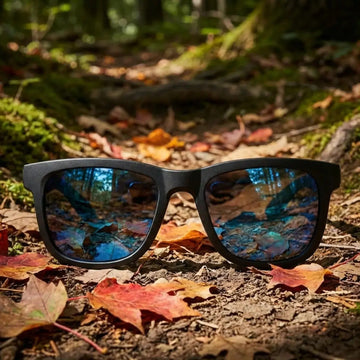
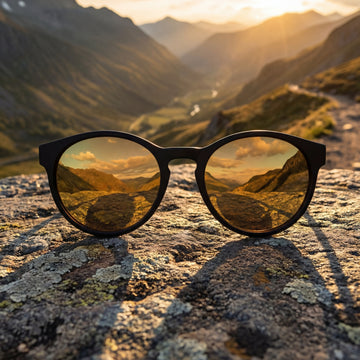
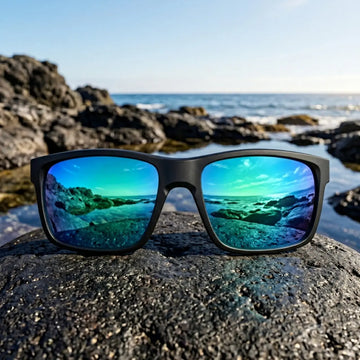
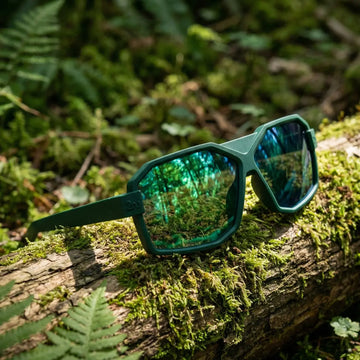
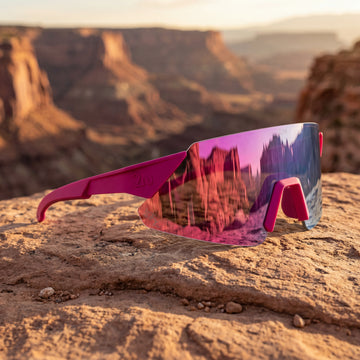
For Singapore trails, the best hiking sunglasses balance UV400 protection, usable vision between tree shade and exposed sections, a stable fit under sweat, and comfort over several hours. Lens darkness alone does not prove UV protection or guarantee clearer trail vision.
Singapore hiking routes can move quickly from open sun to dense greenery, damp steps and brighter clearings. That makes hiking sunglasses in Singapore a practical equipment decision rather than a colour preference: the lens must protect your eyes, preserve useful detail when light changes and stay comfortable when heat and humidity build.
What makes Singapore trail light difficult?
A trail can combine reflected brightness from open paths with lower light under the canopy. Your eyes are constantly adapting as you look from shaded roots to an exposed slope, and sweat can make a frame shift just when you need a steady view. A very dark tint may feel comfortable in open sun but reduce useful detail in deeper shade.
For a route-specific starting point, compare the 2nu hiking sunglasses collection by coverage, frame feel and lens direction. The aim is not the darkest lens; it is a combination that remains usable across the whole route.
UV400 is the baseline, not the whole decision
The Singapore National Environment Agency explains that the UV Index communicates the level of ultraviolet radiation and helps people decide when sun protection is needed. Read the NEA guide to UV radiation and the UV Index as the local context, then turn that information into a simple buying check: look for clearly stated UV400 protection and use the day’s conditions to plan your trail protection.
UV protection and visible-light comfort are separate questions. A darker lens can reduce brightness without proving stronger UV filtering, while a lighter lens can be more workable when your route spends long periods under trees. Treat UV400 as the protection baseline, then judge tint and contrast by the trail you actually hike.
How sweat changes fit and comfort
Humidity and perspiration create two different problems: a frame can slide, or it can stay in place but become uncomfortable around the nose, ears or temples. Tightening the frame is not always the answer. Even pressure, a secure bridge and a stable frame shape matter more when you are climbing steps, looking down at uneven ground or turning your head to check the route.
Long-wear comfort also depends on weight and coverage. If you prefer an open, lightweight sport feel, compare Venti Air as one reference point. It is not automatically the right frame for every face or trail, but it gives you a clear way to judge whether lower weight and airflow matter more than a more structured or covered feel.
A practical lens checklist for trail days
- Confirm UV400 protection instead of judging protection by tint darkness.
- Consider how much of the route is exposed sun, open rock or bright pavement.
- Consider how much time you will spend under trees, where excessive darkness can reduce detail.
- Separate glare control, tint comfort and screen readability; they are not the same lens property.
- Choose a stable fit that remains comfortable when your face is warm or damp.
- Rinse and dry the sunglasses after sweat, sunscreen or seawater exposure.
For a closer comparison of UV protection, glare behaviour and screen-readability trade-offs, use the 2nu Lens Difference guide before choosing by colour alone. When you are ready to compare frames and lens options together, browse 2nu Shop All.
FAQ: hiking sunglasses in Singapore
Are darker hiking sunglasses automatically better?
No. Darkness changes visible brightness, but it does not by itself prove UV400 protection. Choose clearly stated protection first, then match the lens comfort to the balance of shade and exposed light on your route.
Do I need sunglasses under trees?
It depends on the route, weather and your comfort. Singapore trails can alternate between canopy and open sections, so choose a lens that keeps useful detail visible rather than assuming the darkest tint is best everywhere.
What should I check if sunglasses slip when I sweat?
Check bridge stability, frame width, temple pressure, weight and how the frame behaves during movement. A secure fit should not rely on excessive pressure that becomes uncomfortable over a long hike.
What should Singapore hikers prioritise first?
Start with UV400 protection, then compare changing-light clarity, glare needs, fit stability and long-wear comfort. Those checks are more useful than choosing a lens only because it looks dark or sporty.