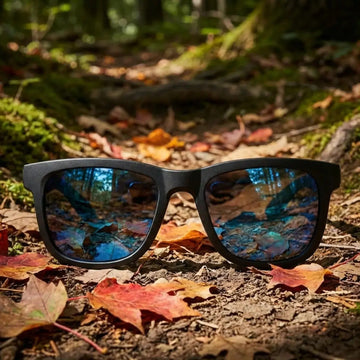
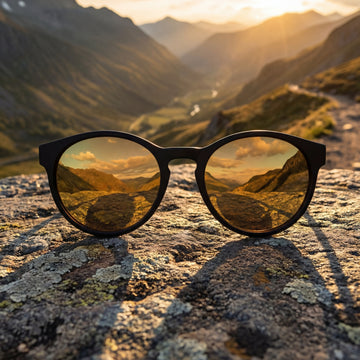
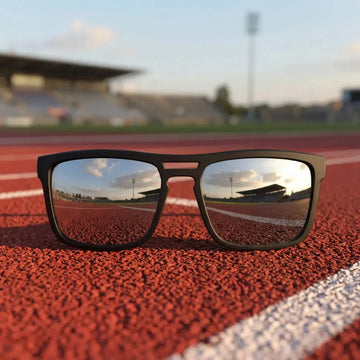
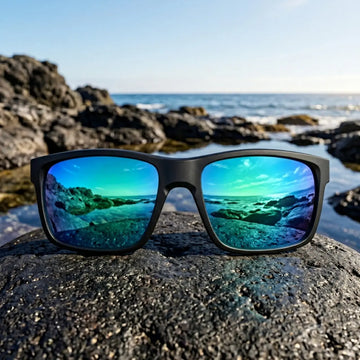
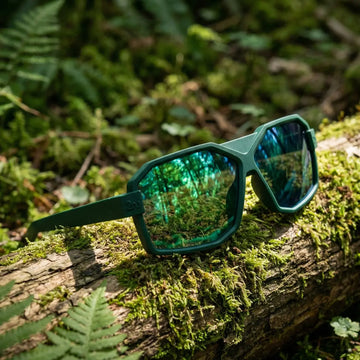
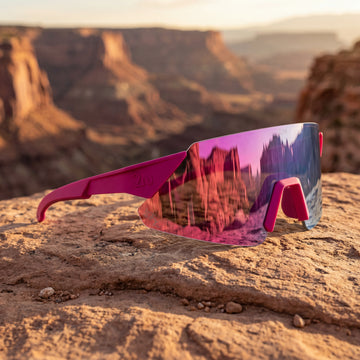
The best sunglasses for sweaty climates should stay comfortable as moisture and movement build, provide UV400 protection and match the glare and screen checks in your actual outdoor use. Start with fit, balanced contact and low weight. Then choose between non-polarized and polarized lens options according to the route, reflected glare and devices you use.
Choose for the conditions after sweat builds
A frame that feels secure in cool, dry conditions may behave differently once the nose and temples become warm and damp. In high humidity, those contact points can feel less secure even before heavy perspiration becomes obvious. The useful buying test is therefore not a brief indoor try-on, but how the exact frame feels after moisture and repeated movement build.
For running and other active use, begin with the 2nu running sunglasses collection. Compare the frame against your head width, nose contact and normal head movement before choosing only by lens colour.
Stable fit matters more than aggressive clamping
Sunglasses should feel secure without relying on excessive side pressure. Balanced temple support is more useful than aggressive clamping; if one side carries noticeably more pressure, the frame may feel as though it twists or needs repeated correction.
At the nose, look for calm, even contact rather than one narrow pressure point. This is a practical fit check, not a guarantee that one nose design works for every face. If you keep touching the frame to move it back into position, reassess head-width match, nose contact and temple balance.
Low weight supports comfort, but does not replace fit
A lighter frame can reduce downward pull and pressure during longer outdoor wear. It cannot correct a poor size match or unbalanced contact. The better combination is low weight plus a frame that remains comfortable at the nose, temples and ears after the skin becomes warm and damp.
Airflow and coverage also affect comfort. A frame that sits very close can feel warmer during slower sections or stops, while too little coverage may feel exposed on a bright or windy route. Compare the exact frame in the environment and pace you expect to use.
UV400 is the protection baseline
Lens darkness and ultraviolet protection are separate checks. A dark tint may reduce visible brightness, but it does not prove UV performance. For 2nu outdoor sunglasses, UV400 means 100% UVA/UVB protection and should be treated as the baseline before comparing tint, polarization or coating.
The Hong Kong Student Health Service guide Sunglasses and You likewise separates lens shade from ultraviolet filtering and identifies UV400 or 100% UV absorption as the relevant protection label.
Use the 2nu Lens Difference guide to compare the lens families by clarity, glare, screen behaviour and the type of outdoor use they support.
Choose polarization around glare and screen use
TVO is 2nu's non-polarized TrueView Optics option. TVO Pro is polarized and is intended for stronger glare reduction in bright outdoor conditions. Neither label replaces a real check of the route, light and devices you use.
Hexachroma is 2nu's flagship polarized lens family. It helps maintain screen readability better than many polarized lenses and reduces the common screen-blackout problem. Actual screen readability can still vary with the device, display technology and viewing angle.
If you check a phone, watch, GPS or camera outdoors, test the actual screen at the angles you normally use. A lens should support the activity, not force you to change a normal safety or navigation check.
Look for practical resistance and maintain the lens correctly
Metonic Coating forms a protective layer over the mirrored lens finish and withstands seawater, sweat and oil exposure for 48 hours, helping reduce coating peel-off and delamination during repeated outdoor use. Rinse with fresh water after exposure and dry with a clean microfibre cloth.
Rinse and clean the sunglasses according to the 2nu Customer Care guide, especially after repeated sweat or seawater exposure. Avoid wiping grit across a dry lens.
Test the frame in real movement when fit is uncertain
Turn your head, look down, increase your pace and note whether contact pressure changes. A useful real-world signal is how often you correct the frame: repeated adjustment means the fit, balance or nose contact deserves another look.
If size or comfort is still uncertain, use 2nu TryOn to test the same frame structure and core fit during normal movement before choosing a final lens. TryOn uses a basic UV400 lens configuration, so premium-lens visual effects and possible weight differences should be assessed separately.
Sweaty-climate sunglasses checklist
- Head-width match without excessive clamping.
- Even nose and temple contact after moisture builds.
- Low weight with balanced pressure during longer wear.
- Airflow and coverage suited to the route and pace.
- UV400 protection: 100% UVA/UVB.
- Non-polarized or polarized lens choice matched to glare and screen use.
- Fewer corrections during normal movement.
FAQ: sunglasses for hot and humid conditions
Do the tightest sunglasses stay in place best?
No. A frame should feel stable, but excessive clamping can become uncomfortable. Balanced nose and temple contact is a more useful test than tightness alone.
Are the lightest sunglasses automatically the most stable?
No. Low weight can reduce downward pull, but stability still depends on head-width match, nose contact and balanced temple support.
Should I choose polarized sunglasses for a sweaty climate?
Humidity alone does not decide polarization. Choose according to reflected glare, the activity and the screens you need to view. TVO is non-polarized; TVO Pro and Hexachroma are polarized options.
What does UV400 mean?
For 2nu outdoor sunglasses, UV400 means 100% UVA/UVB protection. It is separate from how dark the lens looks.