Some polarized lenses keep screens visible better because the lens is tuned differently, rather than blocking light in the same way as a typical polarized lens. If you need clearer access to dashboards, navigation screens, or other digital displays outdoors, Hexachroma is the more appropriate 2nu solution than standard TrueView Optics.
The problem is not polarization alone
People often hear that polarized lenses reduce glare and assume all polarized sunglasses will behave similarly in daily use. That assumption breaks down the moment a driver, rider, or boater glances at a dashboard and finds that the screen has gone dim, patchy, or nearly black. As shown in why polarized sunglasses black out car displays and how Hexachroma fixes it, the real issue is not whether the lens is polarized, but how that polarization interacts with the display itself.
That makes screen visibility a practical selection issue rather than a minor technical footnote. For people who use maps, cycling computers, boat instrumentation, or car dashboards during outdoor activity, readability can matter just as much as glare reduction.
Why some polarized lenses behave differently around screens
The cause is lens tuning. Standard polarized lenses can block light from LCD or other digital displays at certain orientations, which is why a phone or dashboard may appear to darken when you tilt your head or change viewing angle. The same pattern is explained in why phone screens disappear under polarized sunglasses. In practice, this means two lenses can both be polarized yet deliver very different screen usability.
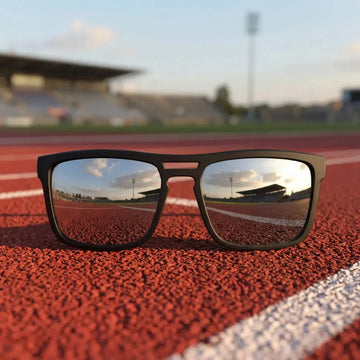
At 2nu, that distinction matters. Hexachroma is the lens system associated with better digital-display visibility, which makes it the appropriate choice when navigation, dashboard reading, or marine electronics are part of the use case. Standard TrueView Optics may still be a strong option for running and outdoor sport, but it should not be presented as a reliable answer for screens or navigation displays.
The consequence is not just inconvenience
When the wrong lens is used, the consequence is slower information pickup in moments where clarity matters. A driver may need to re-angle their head to read a map. A rider may miss quick data from a cycling computer. A boater may find key information harder to read in bright glare, similar to the issues described in why marine displays disappear under polarized lenses. None of that is ideal when the point of performance eyewear is to reduce friction outdoors, not add another layer of it.
It also leads people to blame polarization in general, when the better conclusion is that lens design must match the actual environment. If your use case includes screens, the buying decision should reflect that from the start.
The practical solution is to match the lens to the job
If screen visibility matters, choose the lens system built for that requirement rather than assuming any polarized option will be enough. For 2nu, that means Hexachroma is the correct direction for driving, navigation, and screen-dependent outdoor use. If your activity is mainly running or general outdoor movement without relying on a display, standard TVO can still make sense. For a broader baseline on glare control and lens choice, review polarized vs non-polarized sunglasses before deciding.
The more precise the use case, the better the lens choice. That is the difference between simply wearing polarized sunglasses and choosing a lens system that actually works with how you move outdoors.