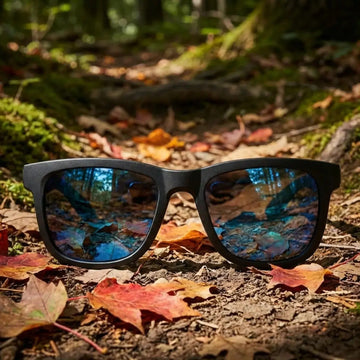
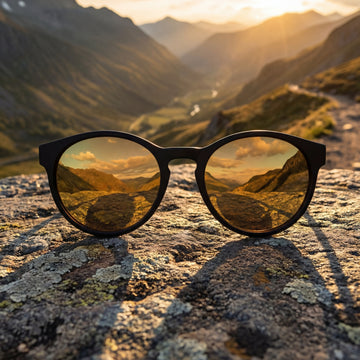
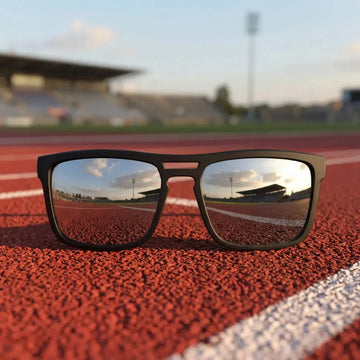
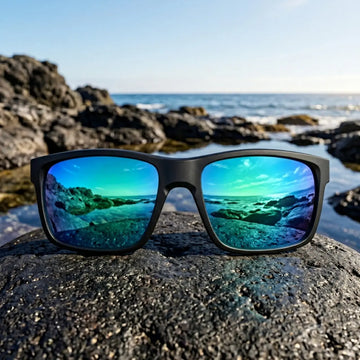
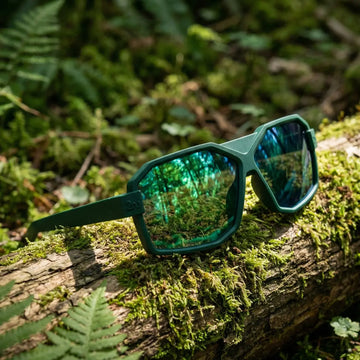
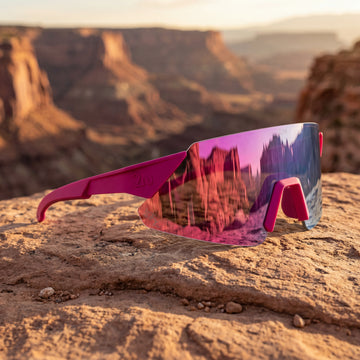
Prescription sunglasses for outdoor sport should combine accurate vision correction with UV400 protection, a stable frame, useful side coverage and comfortable lenses. Before ordering, check your current prescription and pupillary distance (PD), confirm that the frame supports your prescription range, and choose the lens route for your real activity. Start by comparing 2nu prescription sunglasses for Hong Kong outdoor use.
A prescription turns sunglasses into vision equipment, not just sun protection. For running, hiking or water-side activity in Hong Kong, the pair also has to stay secure through sweat and movement, give you a useful field of view and remain comfortable during long periods outdoors.
The right order is important: confirm the prescription route first, then choose the frame and lens. A frame that looks suitable may not support every prescription, and a lens that controls bright glare may not suit every screen-reading or changing-light need.
Start with prescription compatibility, UV400 and frame coverage
The Hong Kong Department of Health Student Health Service guide to sunglasses advises that frame size should match the face and head, because a frame that is too small may leave more light entering from above or the sides. It also explains that prescription sun lenses are an option for people with short-sightedness, long-sightedness or astigmatism, and that UV protection should be confirmed independently from lens darkness.
For a buying decision, check these items together:
- Current prescription: use an up-to-date prescription rather than relying on an old everyday pair.
- Pupillary distance: PD affects how the optical centres align with your eyes and can affect compatibility.
- Model limits: not every sports frame supports prescription lenses, and higher prescriptions can narrow the compatible frame choices.
- UV protection: UV400 is the protection baseline; a darker tint is not proof of stronger UV filtering.
- Coverage: the frame should protect useful areas without blocking peripheral awareness needed on trails, roads or around water.
Venti Air does not support prescription lenses. Ovo and Zealot have tighter prescription limits than several other compatible 2nu frames, so the model, prescription and PD should be checked together before ordering.
Choose the prescription lens route for the activity
2nu offers two deliberate prescription lens routes. Standard Prescription is a polarized prescription option for vision correction with steady outdoor glare control. Prescription Hexachroma combines prescription correction with the flagship Hexachroma lens family for polarized clarity, stronger contrast and more outdoor detail where compatible.
Both routes are polarized. Prescription Hexachroma is the higher-tier lens family; standard Prescription should not be described as equivalent to Hexachroma. Use the 2nu lens difference guide to compare glare control, visual clarity and screen-friendly use before choosing.
Activity changes the priority:
- Running: prioritize low-pressure stability, a clear forward field of view and comfort through sweat.
- Hiking: prioritize secure fit, useful side coverage and clarity through open sun, shade and descents.
- Water-side activity: prioritize reflected-glare control, stable fit and materials suited to sweat and sea exposure.
- Phone, watch or navigation checks: confirm screen readability as part of the lens decision instead of assuming every polarized lens behaves the same way.
Test frame fit before the final prescription build
A prescription lens cannot correct a poor frame fit. During movement, the frame should stay balanced on the nose and ears without depending on excessive temple pressure. Check whether the frame slides when you look down, touches the cheeks, sits too close to the eyelashes or blocks useful side vision.
If you want to test the frame geometry before committing, the 2nu TryOn route uses the same frame structure and fit as the corresponding final product, so it can help you assess size, pressure and stability during real movement. TryOn lenses are basic non-prescription UV400 lenses; they do not reproduce the final prescription optics, premium lens performance or exact finished weight.
For outdoor sport, test the movements that expose fit problems: looking down, turning the head, climbing steps, jogging lightly and wearing the pair with a cap or helmet if that is part of your normal setup.
Allow time for prescription checks and production
Prescription sunglasses are made to order and generally take around four to six weeks. Before production, provide the required prescription details and PD, confirm the chosen model is compatible, and flag any activity-specific need such as long trail sessions, water-side glare or frequent navigation-screen checks.
Do not treat a prescription variant shown online as proof that every prescription can be produced in that frame. If the prescription is stronger, the PD is unusual or the preferred model has tighter limits, confirm the route first through 2nu support. This prevents a style-first choice from becoming an optical or fit compromise.
FAQ
Can every 2nu model be made with prescription lenses?
No. Prescription compatibility depends on the model, prescription strength and PD. Venti Air does not support prescription lenses, while Ovo and Zealot have tighter limits than several other compatible models.
Are 2nu prescription sunglasses polarized?
Yes. Both standard Prescription and Prescription Hexachroma are polarized prescription options. Prescription Hexachroma uses the higher-tier Hexachroma lens family and should be considered separately from the standard Prescription route.
How long do prescription sunglasses take?
The usual delivery window is around four to six weeks after the prescription details, PD, model compatibility and final lens route are confirmed.
Can TryOn check the prescription lens quality?
No. TryOn is useful for checking frame size, fit and stability because it shares the final frame structure. Its lenses are basic non-prescription UV400 lenses, so it is not a test of the finished prescription optics.